
Northern Norway · Aurora guide
Northern lights
in Alta.
Explore the northern lights model around Alta in Norway’s far north. Follow the activity over the Altafjord region and toward the inland Finnmarksvidda plateau.
Coming soon for iPhone and Android
Activity model · not a sighting guarantee
The same NOAA aurora model used in the Aurora Signal app. Readings refresh every five minutes.
Take the next step with Aurora Signal
Make the most of
your Alta nights.
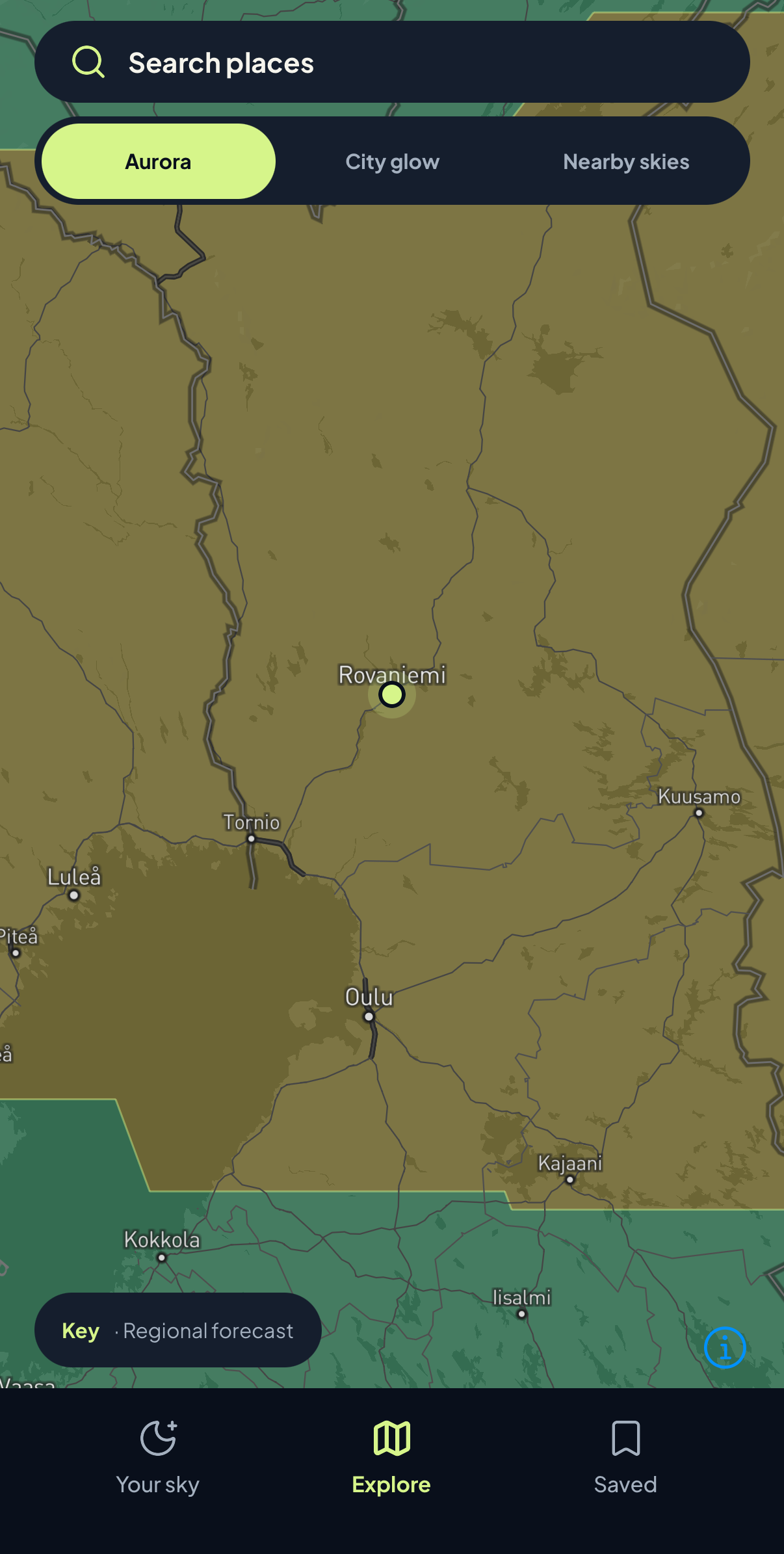
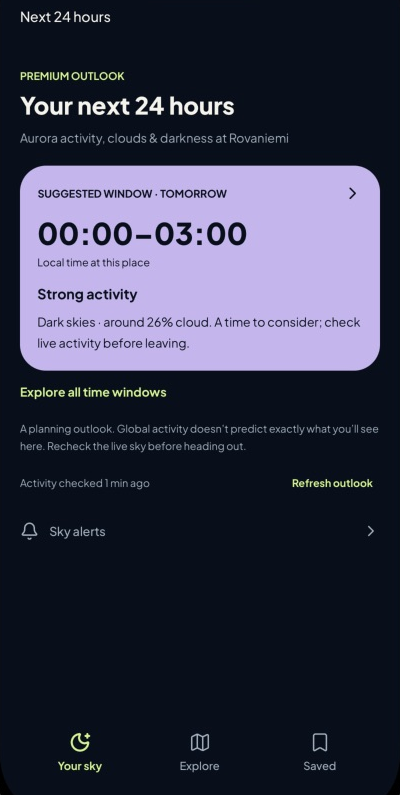
The map shows aurora activity. The app brings your local outlook and favorite places together, so you can decide when to look up.
- Find a time worth considering.Explore activity, clouds, and darkness together in your Premium outlook.
- Keep your skies close.Save Alta and the other places you care about for your next visit.
- Look beyond one location.Explore the aurora map and surrounding skies from your phone.
The app is getting ready for launch. Some planning features require Premium. Aurora sightings are never guaranteed.
Follow your curiosity north
Keep exploring.
Explore nearby skies and other aurora destinations.
A little sky knowledge
The northern lights
in Alta.
Alta is closely associated with the northern lights, reflected in its Northern Lights Cathedral. Its position east of Tromsø makes it a useful separate point on the map, particularly when comparing the shape of the oval across northern Scandinavia.
The model is regional, not a street-level prediction. Zooming in adds geographic context but does not create more detailed aurora measurements or tell you which side of a mountain will offer a view.
Destination reference: Visit Norway
Model and forecast explanation: NOAA Space Weather Prediction Center.
Is Alta’s aurora forecast the same as Tromsø’s?
Both use the same global NOAA model, centered on different locations. Their readings can differ because the oval is not uniform across northern Norway. Compare the two maps using the same observation time.
When is the northern lights season in Alta?
Autumn to early spring. This is a guide to the darker part of the year, not a prediction for a particular night. Aurora activity changes throughout the year.
How far ahead does the map forecast?
NOAA’s OVATION product provides a short-term outlook, typically around 30–90 minutes depending on solar wind conditions. It is not a forecast for the whole night. Check the forecast timestamp and return for a fresh reading.