
Alaska, United States · Aurora guide
Northern lights
in Fairbanks.
Check northern lights activity around Fairbanks in Interior Alaska. Explore the modeled aurora band over the city and its surrounding region before your next night under the sky.
Coming soon for iPhone and Android
Activity model · not a sighting guarantee
The same NOAA aurora model used in the Aurora Signal app. Readings refresh every five minutes.
Take the next step with Aurora Signal
Make the most of
your Fairbanks nights.
The map shows aurora activity. The app brings your local outlook and favorite places together, so you can decide when to look up.
- Find a time worth considering.Explore activity, clouds, and darkness together in your Premium outlook.
- Keep your skies close.Save Fairbanks and the other places you care about for your next visit.
- Look beyond one location.Explore the aurora map and surrounding skies from your phone.
The app is getting ready for launch. Some planning features require Premium. Aurora sightings are never guaranteed.
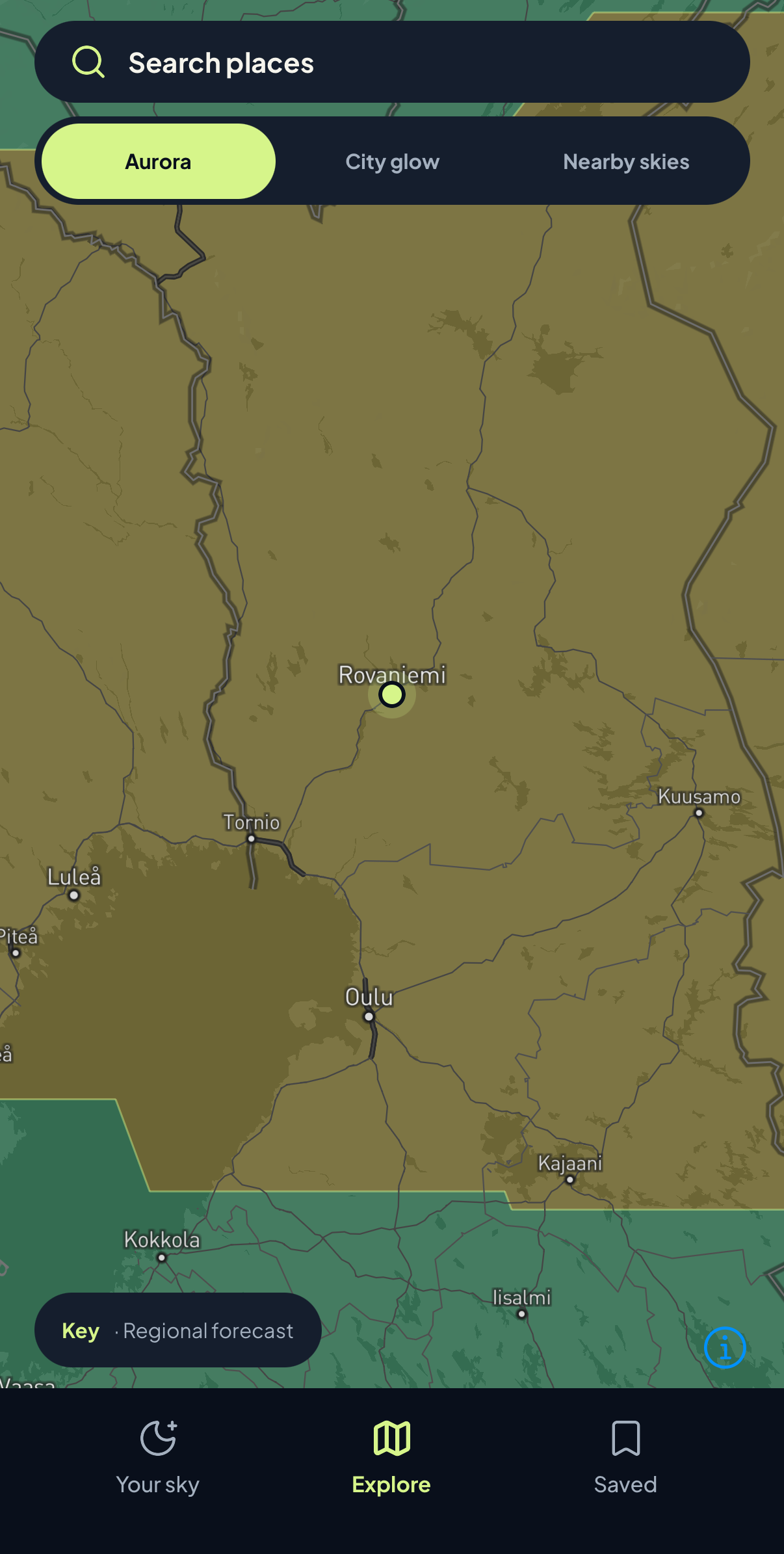
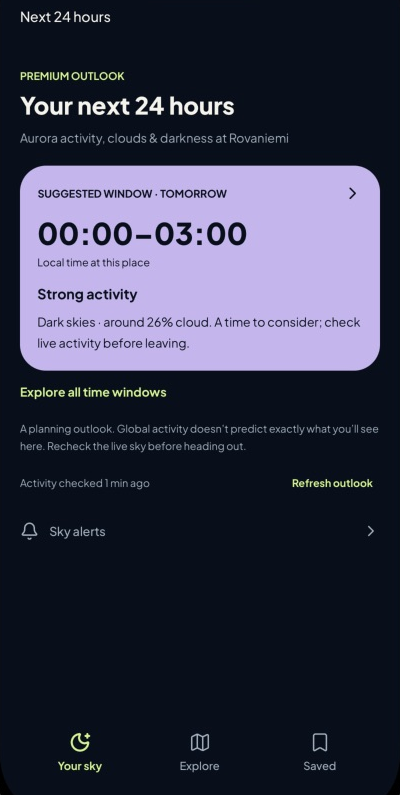
Follow your curiosity north
Keep exploring.
Explore nearby skies and other aurora destinations.
A little sky knowledge
The northern lights
in Fairbanks.
Fairbanks is a well-known aurora base in Alaska’s Interior, with viewing destinations spread beyond the city. The map is centered on Fairbanks itself; it does not rank individual lodges, trailheads, or viewpoints.
The city’s position near the auroral oval means a modest global activity level can still be interesting locally. Look at the actual regional pattern instead of waiting only for reports of a major geomagnetic storm.
Destination reference: Travel Alaska
Model and forecast explanation: NOAA Space Weather Prediction Center.
Does a quiet global forecast rule out aurora in Fairbanks?
Not necessarily. A location near the usual oval can experience aurora without a major global storm. The model is still only a short-term guide and does not guarantee a visible display.
When is the northern lights season in Fairbanks?
Late August to late April. This is a guide to the darker part of the year, not a prediction for a particular night. Aurora activity changes throughout the year.
How far ahead does the map forecast?
NOAA’s OVATION product provides a short-term outlook, typically around 30–90 minutes depending on solar wind conditions. It is not a forecast for the whole night. Check the forecast timestamp and return for a fresh reading.